
Blog
Padel Tennis vs Tennis: What’s the Difference?

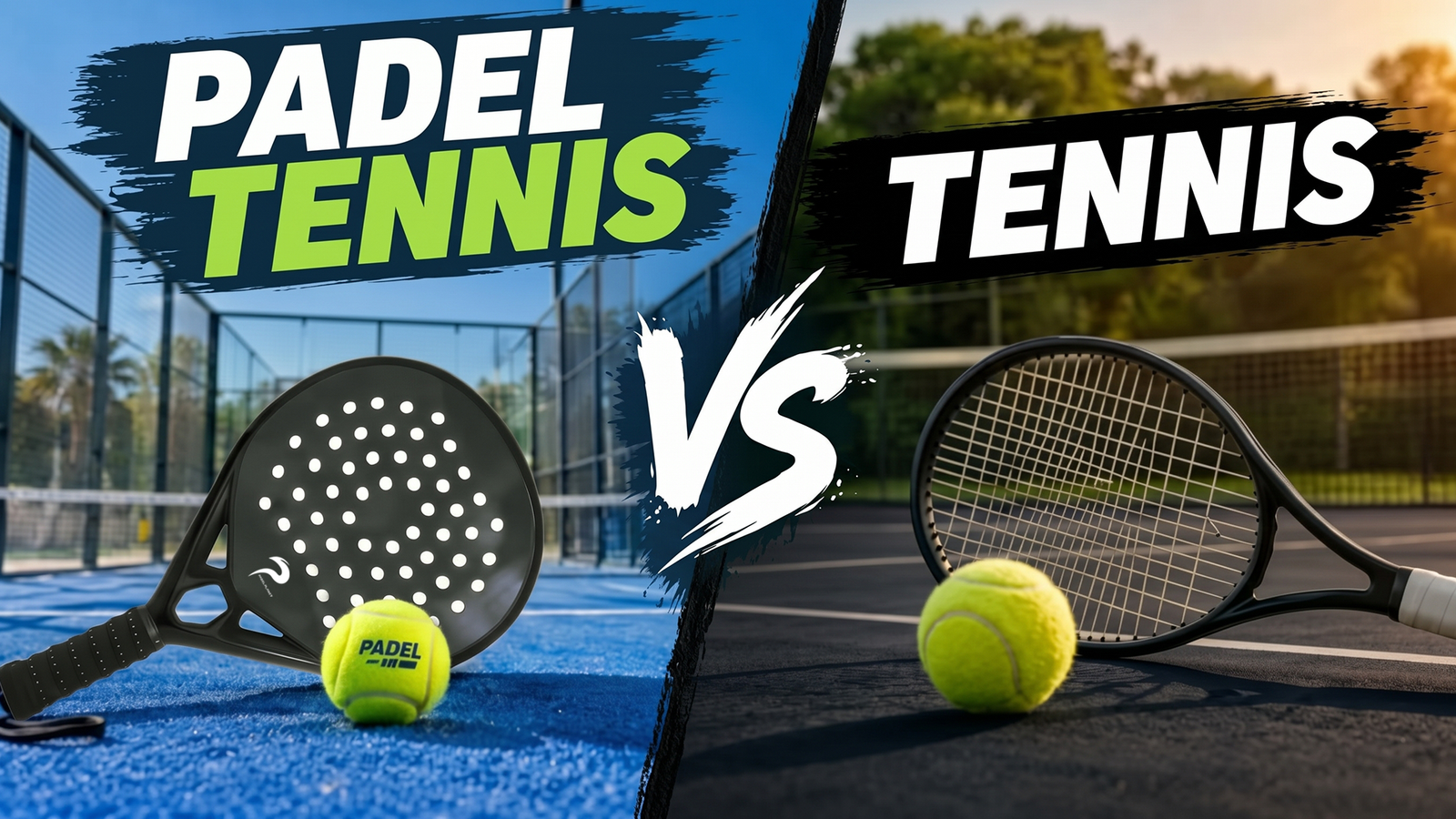
Padel Tennis vs Tennis: What’s the Difference?
If you are familiar with tennis, you may have noticed a new racket sport gaining popularity around the world: Padel. At first, padel and tennis look very similar. Both use a net, rackets, a ball and court-based gameplay. However, once you step onto a padel court, the differences become clear.
If you are familiar with tennis, you may have noticed a new racket sport gaining popularity around the world: Padel. At first, padel and tennis look very similar. Both use a net, rackets, a ball and court-based gameplay. However, once you step onto a padel court, the differences become clear.
So, what is the difference between padel and tennis?
The biggest differences are the court size and design, rackets, serving technique, use of walls, and style of play. Padel is normally played as doubles on a smaller enclosed court, while tennis can be played as singles or doubles on a larger open court.
If you’re deciding whether to try padel or tennis—or you’re a tennis player considering switching to padel—this guide explains everything you need to know.
Padel vs Tennis: Quick Comparison
| Feature | Padel | Tennis |
| Typical format | Doubles | Singles or doubles |
| Court | Smaller, enclosed with walls | Larger, open court |
| Court length | 20 m | 23.77 m |
| Court width | 10 m | 8.23 m singles / 10.97 m doubles |
| Racket | Solid, perforated padel racket | Strung tennis racket |
| Serve | Underarm | Overarm |
| Walls | Used during rallies | Not part of normal court play |
| Playing style | Positioning, control, teamwork and consistency | Power, movement, serve and shot variety |
| Scoring | Similar foundations to tennis, with competition-specific formats | Traditional tennis scoring |
The International Tennis Federation lists a standard tennis court at 23.77 meters long, with a width of 8.23 meters for singles and 10.97 meters for doubles. Padel uses a substantially different enclosed court design, with glass and mesh forming an integral part of play.
The Court Is the Biggest Difference
The easiest way to understand padel vs tennis is to look at the court. A tennis court is larger and open around the playing area. Players have considerably more space to cover, particularly during singles matches. A padel court is smaller and enclosed by glass walls and metallic mesh. Instead of treating the surrounding walls as boundaries that end the rally, players can use them strategically after the ball bounces.
This completely changes how rallies develop. In tennis, a player might hit a powerful shot to push an opponent deep behind the baseline. In padel, a player can use angles, lobs, rebounds and controlled shots to create an opening. The smaller court also means that positioning and communication between partners are extremely important.
Padel Is Usually Played as Doubles
One defining characteristic of padel is its doubles format. Padel is generally played with four players—two on each side of the net. This makes communication, positioning and teamwork central to the game. Tennis, on the other hand, can be played as either:
- Singles: one player against one player
- Doubles: two players against two players
This means someone coming from doubles tennis may find the team-oriented nature of padel familiar. However, the smaller court and walls create very different tactical situations.
Padel Racket vs Tennis Racket
The equipment is another major difference. A tennis racket has a large head with a strung hitting surface. Tennis rackets are designed to generate power, spin and control through the interaction between the strings, frame and ball.
A padel racket is completely different. A regulation padel racket has a solid hitting surface with perforations rather than strings. FIP rules set a maximum overall racket length of 45.5 cm and require the hitting surface to have holes within prescribed specifications. A safety cord attached to the handle is also required.
Padel rackets are commonly available in different shapes, including:
- Round
- Teardrop
- Diamond
These shapes can influence balance, control and power. If you’re unsure which padel racket is right for you, contact Padel Planet PK’s expert customer support team for personalized guidance. With years of experience in the Pakistani padel market, Padel Planet PK offers authentic international brands including Adidas, Siux, and Volt and is an official distributor of these brands in Pakistan. Our team can help you find the right racket based on your skill level, playing style, and performance preferences.
For beginners, racket selection is particularly important. A control-oriented racket can often provide a more manageable starting point, while experienced players may look for equipment designed around specific playing styles.
Padel Uses the Walls
This is perhaps the most exciting difference for someone learning padel tennis for the first time. In tennis, the surrounding walls or fences are generally not part of normal rally play. In padel, the glass walls and mesh are fundamental to the game. After the ball bounces on the court, it can interact with the surrounding walls and remain in play according to the rules. Players therefore need to learn not only how to hit the ball but also how to anticipate rebounds.
This creates a different tactical skill set. Instead of immediately attacking every ball, a padel player may allow the ball to come off the back wall before returning it. Players also learn to use the walls to create angles and make difficult returns. For many beginners, learning to read these rebounds is one of the most interesting parts of learning padel.
The Serve Is Different
The serving technique is another important difference between padel and tennis. Tennis players typically serve overhead, often using significant speed, spin and placement to start the point. Padel uses an underarm serve. Under the FIP rules, the server bounces the ball before striking it, and the contact must be made at or below waist level.
The purpose of the padel serve is therefore different from the traditional tennis serve. Rather than relying primarily on serve speed, padel players often focus on:
- Placement
- Consistency
- Spin
- Creating a difficult return
- Getting into the correct position after serving
This can make the opening of a padel point feel very different from tennis.
The Scoring System Is Similar—but there Are 2026 Updates
Both sports have traditionally shared familiar scoring concepts such as points, games and sets. However, players should be aware that padel competition formats are evolving. The International Padel Federation introduced the Star Point system for selected 2026 professional and FIP circuits. FIP announced that the system would be implemented in Premier Padel, the CUPRA FIP Tour, FIP Promises and FIP Beyond from 2026.
This means that anyone reading older articles about padel scoring should check which competition format is being discussed. For recreational players, the exact scoring format can also depend on the club or event.
The Ball and Equipment Feel Different
Although padel and tennis use similar-looking balls, official specifications are not identical. FIP rules specify approved padel balls with a diameter between 6.35 and 6.77 cm and a weight between 56.0 and 59.4 grams. The combination of the ball, padel racket and enclosed court produces a distinctive playing experience.
In tennis, the larger racket and strings can help players generate substantial power and spin. In padel, the solid racket surface and shorter racket make control, placement, timing and racket handling particularly important.
Padel and Tennis Have Different Playing Styles
The equipment and court design naturally lead to different tactics.
Tennis
Tennis often places a greater emphasis on:
- Serve performance
- Groundstrokes
- Court coverage
- Power
- Spin
- Baseline play
- Explosive movement
Padel
Padel places greater emphasis on:
- Positioning
- Teamwork
- Shot selection
- Wall rebounds
- Lobs
- Volleys
- Control
- Patience
- Creating angles
This doesn’t mean tennis is purely about power or padel is purely about control. High-level players in both sports require a combination of technical skill, athletic ability, tactical awareness and consistency. The difference is how the court and equipment influence those skills.
Is Padel Easier Than Tennis?
This is one of the most common questions from people searching for padel vs tennis. For many beginners, padel can feel easier to start because:
- The court is smaller.
- The serve is underarm.
- Doubles play reduces the amount of court each individual covers.
- Rallies can continue through wall rebounds.
- Beginners can often keep the ball in play without immediately mastering advanced tennis strokes.
However, easy to start does not mean easy to master. As your level improves, padel becomes increasingly technical. Reading wall rebounds, defending from the back of the court, controlling lobs, executing volleys and understanding positioning all require practice.
Can Tennis Players Play Padel?
Absolutely. Tennis players already have several transferable skills, including:
- Hand-eye coordination
- Footwork
- Ball tracking
- Volleys
- Groundstroke technique
- Understanding of court positioning
- Competitive experience
However, tennis players may initially need to adjust to the smaller padel racket, underarm serve, enclosed court and wall rebounds. One common mistake is trying to play padel exactly like tennis.
A powerful tennis-style shot is not always the best option in padel. Players need to learn when to defend, when to lob, when to attack and how to use the walls.
Which Sport Should You Try?
The answer depends on what type of playing experience you’re looking for. If you enjoy a larger court, singles competition, powerful serves, long baseline exchanges and a traditional racket-sport format, tennis may be the natural choice. If you prefer doubles, teamwork, fast reactions, strategic positioning and the unique challenge of playing with walls, padel may be worth trying. And if you already play tennis, you don’t necessarily have to choose one over the other. Many of the fundamental skills can transfer between the two sports, while each offers a different tactical challenge.
The smaller enclosed padel court, solid perforated racket, underarm serve and use of walls create a unique style of play. Tennis offers a larger playing area, strung rackets and a different combination of serving, movement and shot-making demands. For someone completely new to racket sports, padel can be an approachable way to get started. For an experienced tennis player, it can provide a new tactical challenge without requiring you to abandon the skills you’ve already developed.
Whether you’re searching for padel in Pakistan, choosing your first padel racket or looking to improve your game, understanding these differences is the first step. Ready to start playing padel? Explore quality padel rackets and equipment from trusted brands at Padel Planet Pakistan and choose the equipment that matches your playing style and experience level.
